|
Information Page Links:
Featured Ball Valve Manufacturers
About Ball Valves
Ball Valve Terms
Ball Valves Associations
Ball Valve Resources
Trade Shows
Featured Ball Valves Articles
More Articles
|
|
About Ball Valves and Ball Valve Suppliers
A ball valve is a stop valve that is designed mostly
for on/off service. It is essentially a plug valve with a round hole
and a sphere-shaped plug. A ball valve contains a ball with a small hole
in the middle that helps to control the flow of materials through the
pipe. An actuator, which can be either electric or a manually operated
handle, rotates the ball 90%. When the hole of the ball is facing away
from the pipe opening, flow is restricted. When it is aligned with the
opening, flow is restored. The position of the handle immediately indicates
whether the valve is closed or open. Along with being easy to monitor,
ball valves are also simple to clean and repair; as the ball rotates,
the seat performs a self-wiping action that prevents any buildup.
Ball valve suppliers offer their products with two primary design options. These
are the floating ball design, a less costly option for lower duties, and a trunnion
ball option, which is used for higher duties and, therefore, more costly. Ball
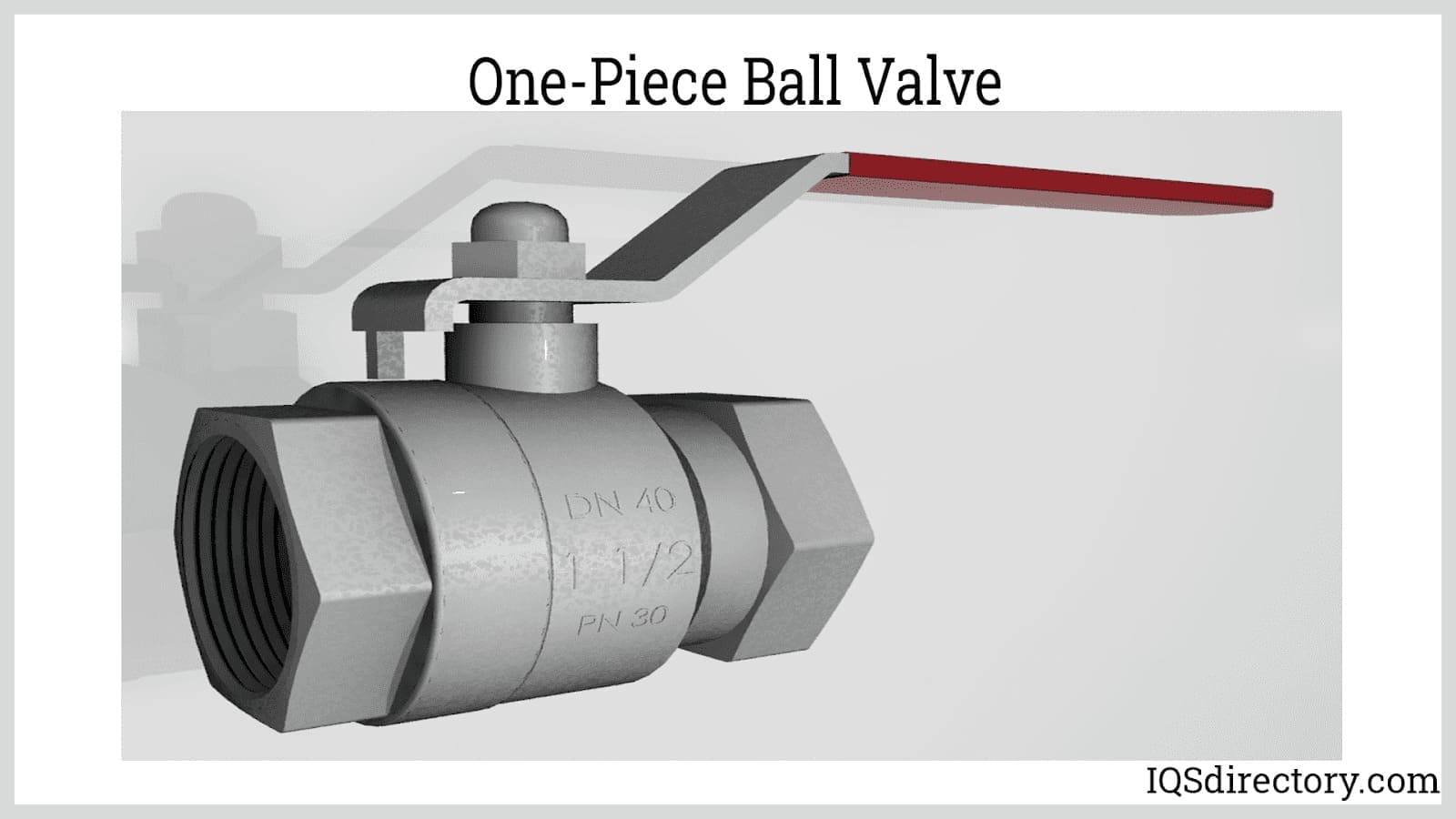
valve suppliers also provide several body styles, including one-piece, two-piece,
three-piece, even four- and five-piece and flanged body construction. The type
of application determines which ball valve is the most appropriate. Sizes of
ball valves range from very small up to 42 inches and up to 7,500 psi in pressure
ratings. Although they are manufactured from a wide variety of materials, some
common materials are stainless
steel, plastic, bronze, copper, cast iron, ductile iron, metal alloys and
brass. Metal valves are recommended for gases and high temperature fluids; use
plastic valves for liquid applications only.
Bore, or port, sizes differ as well. In a full bore valve, the diameter of the
hole in the ball is the same size as the hole in the pipe. Looking down a piece
of pipe, in other words, there would not appear to be any constriction at the
location of the valve. If the diameter of the hole through the ball is less than
that of the pipe, it is referred to as a reduced or standard bore/port. Some
valves gradually narrow, while the reduction in others is basically a shoulder.
Many times the diameter tapers to the next standard size. There is very little
pressure loss difference between the full bore and reduced bore valve.
Advances in ball valve design and materials have significantly increased their
popularity. Ball valves can be used for isolation of systems, regulation of some
types of low flow (e.g. throttling the flow of air at differential pressures
up to 1,000 psi) and backflow prevention, but only with a swing check component.
They can handle high pressure and a large volume of fluids, gases and suspended
solids (slurries). New valve designs have enabled ball valves to be used in high-vacuum
situations. This possibility was not previously considered, due to the inherent
tendencies of these valves to leak and trap gas. Ball valve suppliers will also
be able to offer aluminum construction in the near future.
|
|
Two-Way Ball Valve
Image Provided by PBM,
Inc.
|
|
Featured
Articles
Article
Article
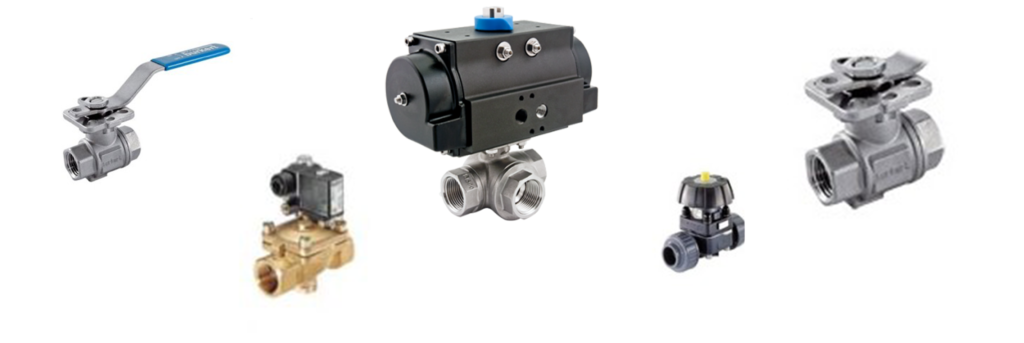
Types of Ball Valves
- are valves where liquids can flow only
one way. The pressure from the liquid forces the ball to move,
when the pressure from the fluid stops the ball also stops and
the valve closes.
- make various kinds of ball valves.
- can handle small and large flows
with high pressure ratings.
- are
quarter-turn valves which utilize a cylindrical or tapered plug with
a hole in the middle to control flow.
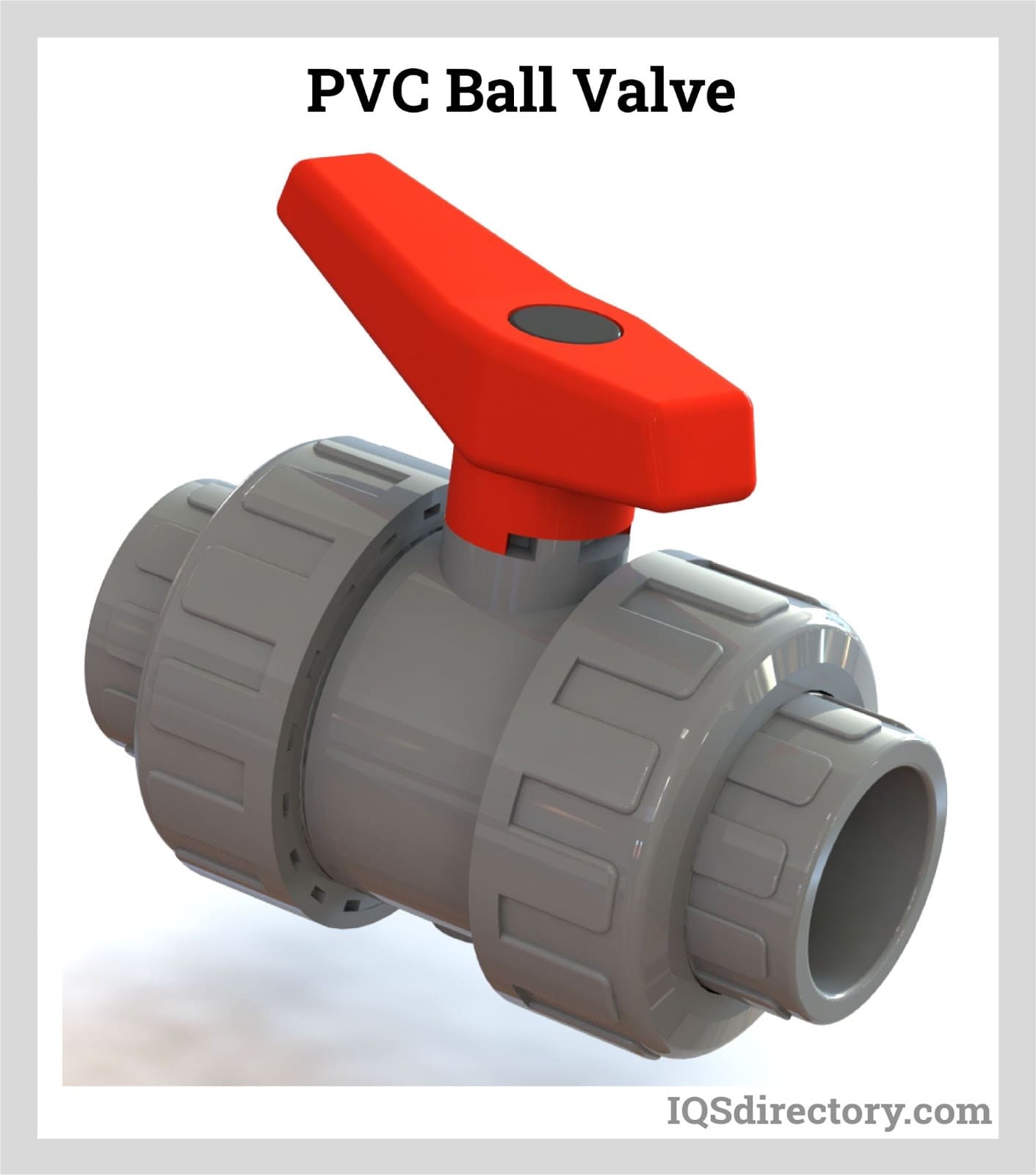
- are made of a polymer of vinyl chloride.
- are made of stainless steel.
- use
outside levers to slow down the flow of materials through a pipe. The
lever pulls the ball into the flow which causes the flow to stop more
quickly.
- have three different ports. Some three
way valves have all ports open while others may all be closed or
only have one open.
- have
an inlet pipe connection and an outlet pipe connection.
|
|